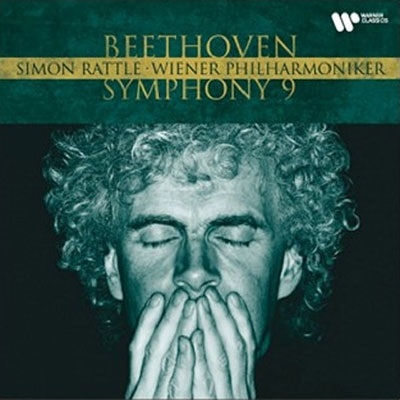
2002年4月29日から5月17日にかけて、ウィーンのムジークフェラインザールでおこなわれた連続演奏会を収録したライヴ録音から《第九》を、赤金色のカラーレコードとして限定リリース!
ラトルはここでベーレンライター版の楽譜を使用し、楽器編成は本来の二管編成、配置はヴァイオリン両翼型という時代様式的な条件も踏まえつつ、随所に刺激的な仕掛けを施しています。
特にこの第9番では、伝統的な歌唱を避けるためか、かつての仲間で、さまざまな近現代作品でも共演したバーミンガム市交響合唱団を招いて、ときに荒々しいまでの表現力を持った合唱を自在に響かせることに成功しています。ウィーン・フィルもこうしたラトルの要求に巧みに応え、ソロはもちろん、トゥッティでも彼ららしさを失うことなく、先鋭さと豊かさを兼ね備えた見事な演奏を聴かせているのが印象的です。
赤金色のカラーレコード(140g)2枚組として限定リリース!
ワーナーミュージック・ジャパン
発売・販売元 提供資料(2024/02/16)
Interpretations of Ludwig van Beethoven's Symphony No. 9 in D minor, "Choral," range from the heavily Romantic to the spryly Classical, and this uncomfortable duality stems from the work's position on the fault line between those two musical eras. On the one hand, the dominance of German conductors, which lasted well into the 20th century, produced a late Romantic school of thought that favored a profoundly reverent treatment of the work, supported by the quasi-religious expressions in Johann Friedrich von Schiller's An die Freude, which is the text of the ecstatic Finale. On the other, the rise of historically informed practice in the later decades of the 20th century tended to de-emphasize the Romantic mysticism of Schiller's poem and the same impulse in Beethoven's music, stripped away accretions of accepted practice and dogma, and played up the Classicism that still underlies the first three movements (however beyond Classical the Ode to Joy is, by any standard). As a result, modern performances find themselves somewhere on a spectrum between these ways of thinking, and Simon Rattle's live performance with the Vienna Philharmonic Orchestra finds itself situated closer to the Romantic pole than to the Classical. One could hardly expect the performance to be otherwise, for the VPO has had a long-standing tradition in playing this hallowed work, and whatever changes a conductor may try to introduce to performances necessarily will be small. Furthermore, Rattle is not known as a follower of any early music movement, but that doesn't mean he is unaware of developments in their practices. Indeed, while observing the traditions that have grown up with the Ninth, he takes pains to emphasize details in the orchestration and to give it greater clarity, which are aims of authentic performance practice at base. Even though he doesn't come near the dramatic changes wrought by the likes of John Eliot Gardiner or Roger Norrington, Rattle still prizes transparency, and therefore avoids the thick textures and homogenized ensemble sound that sometimes afflicted old-style Beethoven performances. Connoisseurs of period practice who want their Beethoven revamped and streamlined will not care for Rattle's conservative interpretation, but any mainstream audience will enjoy this recording and appreciate the power and accuracy of the playing.
Rovi